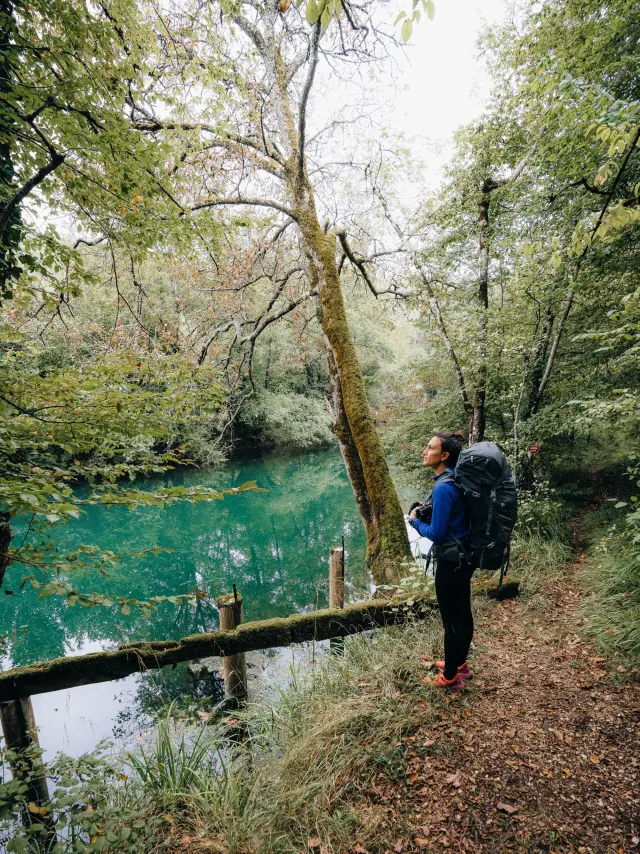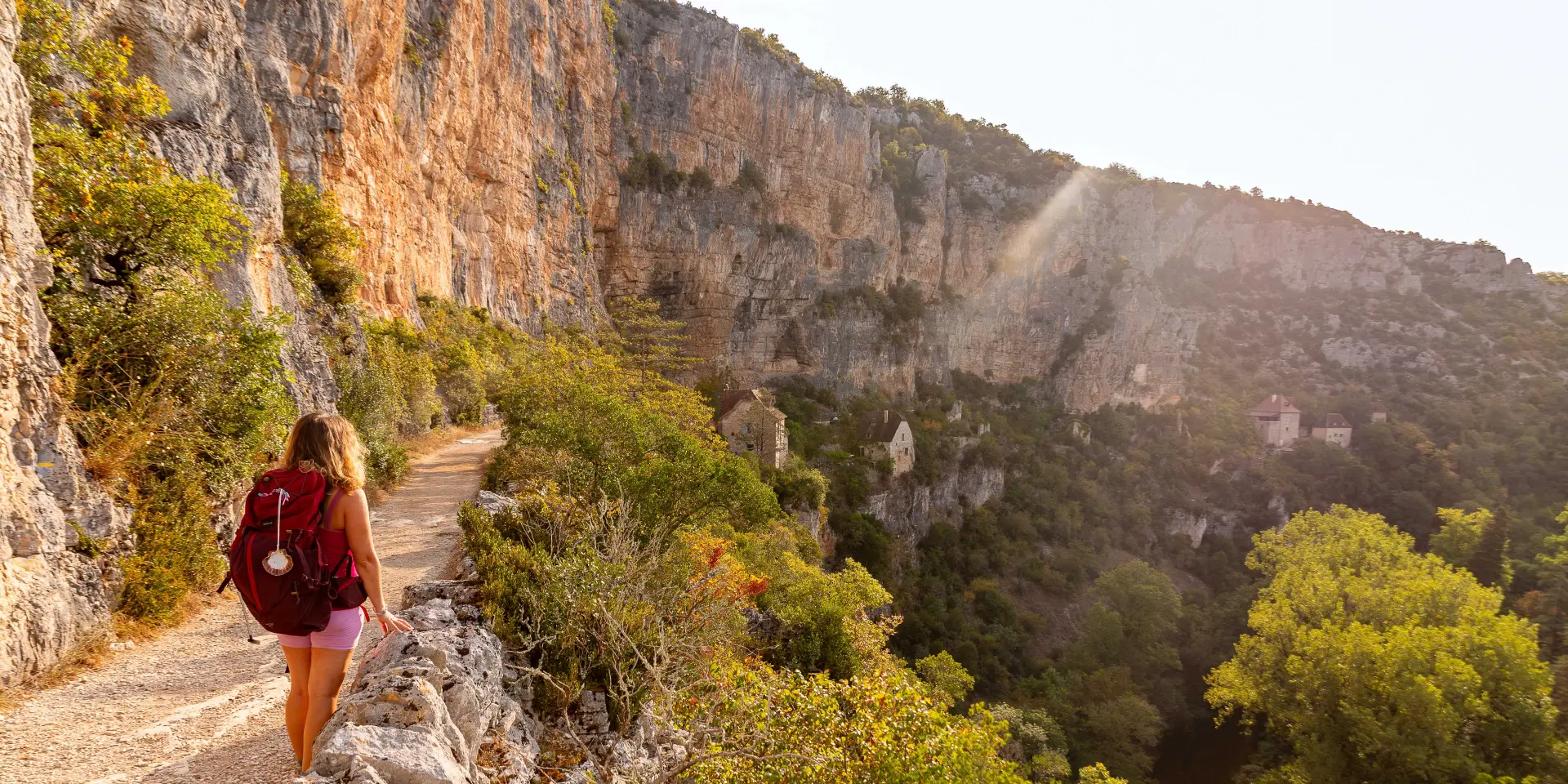
Hike along the GR651 – Beneath the cliff at Sauliac-sur-Célé
©

Hike along the GR651 – Beneath the cliff at Sauliac-sur-Célé

|

Ariane Fornia

An experienceintense human connection

Walking the routes to Santiago de Compostela

Ajouter aux favoris

Lands traversed by pilgrims since time immemorial, the Way of St James winds its way through the landscapes of the Grand-Figeac region. The Via Podiensis , or the route from Le Puy-en-Velay, the legendary path leading to the Spanish sanctuary, passes through wild landscapes such as the Aubrac plateaus before gradually reaching Figeac and the golden hues of the Causses du Quercy. Before and after the medieval town, two sections of the GR®65 trail are listed as UNESCO World Heritage Sites. From Figeac, the Rocamadour route, the GR®6 winds its way through the landscapes of the Ségala, the Limargue and the Causses towards the religious city, whilst at Béduer, the Célé route, the GR®651, heads off towards the wild Célé valley. Whether you choose the classic route or one of the alternatives, each of the Way of St James routes has its own unique features, monuments and landscapes. Let’s set off on this deeply enriching journey!

The Puy Route

THE GR®65

Whilst the pilgrimage to Santiago de Compostela dates back to the Middle Ages, the current GR®65 is much more recent. Developed from the 1970s onwards by the French Hiking Federation, it is now one of the most popular routes to Santiago de Compostela in France and benefits from an extensive network of accommodation.

Following the Puy route, or Via Podiensis, it links Le Puy-en-Velay, in Haute-Loire, toSaint-Jean-Pied-de-Port, in the Pyrénées-Atlantiques, over a distance of nearly 755 kilometres. Along the way, it crosses the Lot from north to south. Further north, the GR®65 reaches Geneva via the Via Gebennensis, which takes walkers to Le Puy-en-Velay before giving way to the Via Podiensis.

With our pilgrim’s journal in hand and our rucksack on our backs, let’s set off on this legendary route. From the lush landscapes ofthe Aveyron to the cliffs and golden stone of the Lot Valley, the route reveals, stage by stage, an exceptional natural and cultural heritage.

Along the way, we’ll pass through two sections of the trail listed as UNESCO World Heritage Sites, as well as towns and villages with their own unique character: Figeac, Faycelles and Cajarc. These are all stops where you can take the time to discover the heritage, the landscapes and the very special atmosphere of the Way of St James.
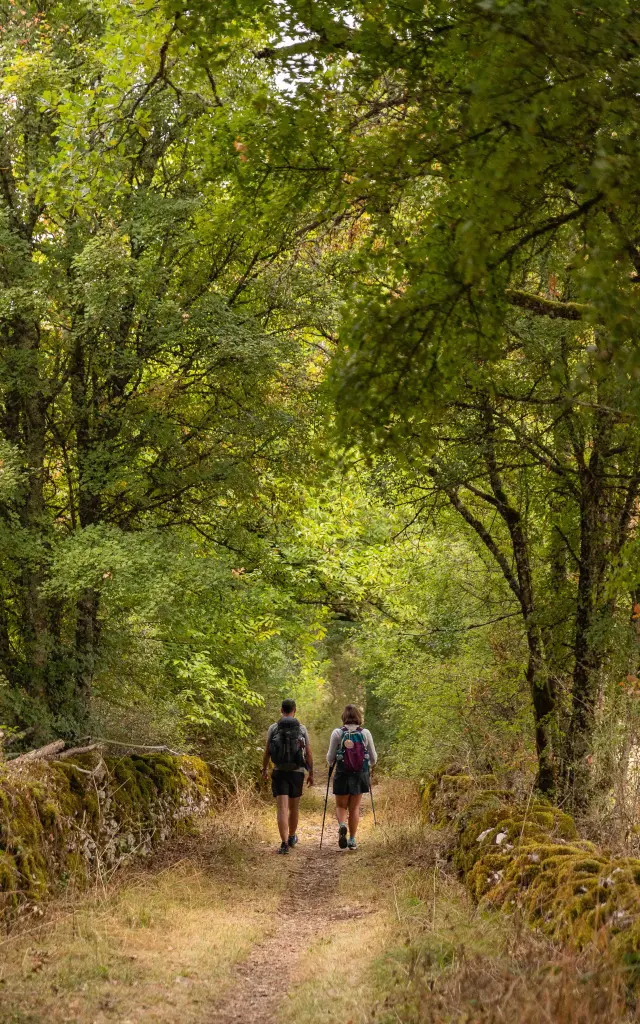
The Rocamadour Trail

The GR®6

In the Middle Ages, Rocamadour was already one of the great pilgrimage sites of Christendom. From the 12th century onwards, pilgrims from all over Europe flocked to the town to pay their respects to Our Lady of Rocamadour, to whom numerous miracles are attributed.

Stretching some 1,360 kilometres, the GR®6 links Saint-Paul-sur-Ubaye, in the Alpes-de-Haute-Provence, to the Arcachon basin. In the Lot, it passes through Figeac, where it joins the Via del Puy, before continuing on to Rocamadour and then Sarlat. From Figeac, there are three stages to reach the famous Marian town on foot.

Once in Rocamadour, walkers have several routes to choose from: continue along the GR®6 towards Sarlat or head for Cahors to rejoin the GR®65, notably via the GR®46.

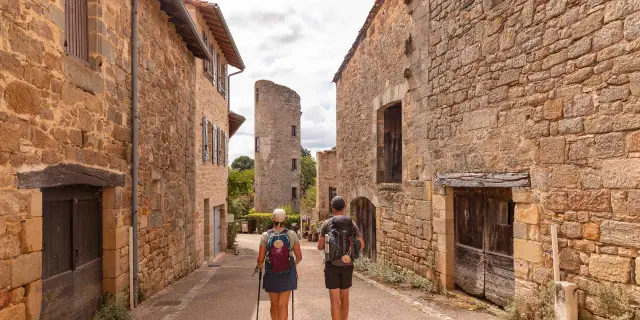
After a stroll through the medieval streets of Figeac, let’s set off. Our first stop is Cardaillac, listed as one of the Most Beautiful Villages in France, where the ruins of the medieval fort and its imposing towers dominate the landscape.

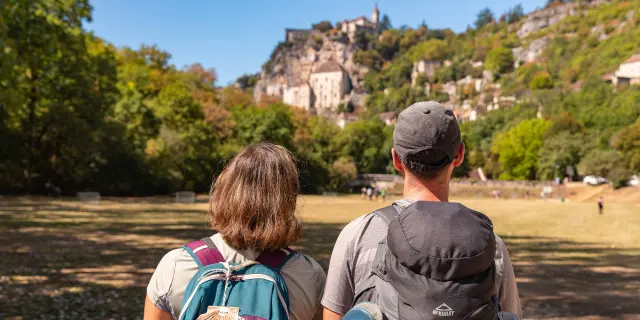
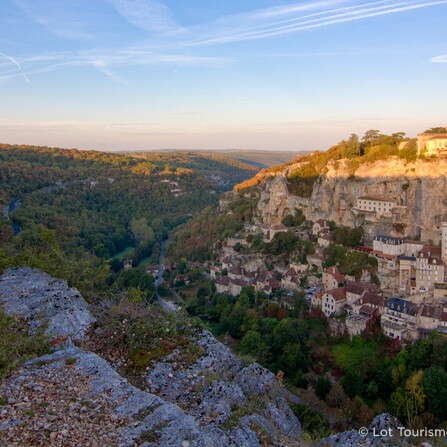
At Lacapelle-Marival, the path leads us to the foot of its majestic castle, before gradually winding its way through the limestone landscapes of the Causse de Gramat. Next comes the spectacular Alzou Canyon, which accompanies us all the way to Rocamadour. Perched on the cliff face, the town finally comes into view: a timeless place, deeply linked for centuries to faith, pilgrimage and hope.

The Célé Trail

The GR®651

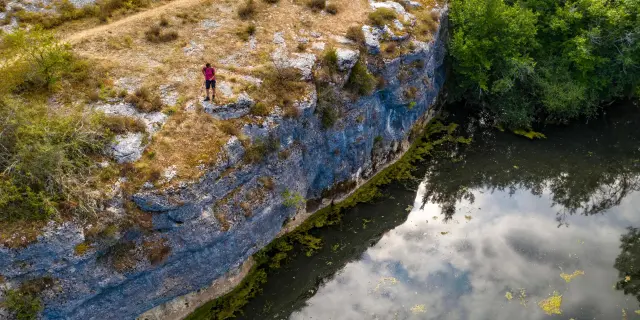
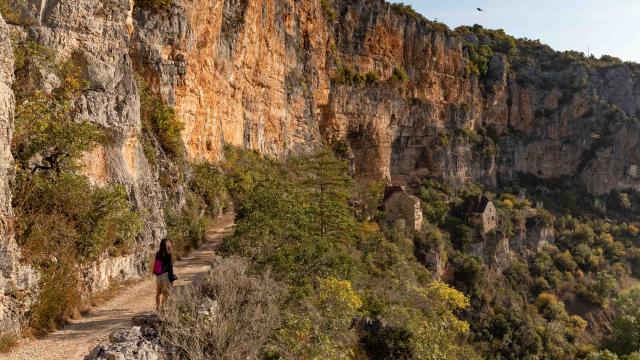
Let’s set off on a peaceful, unspoilt and wild route along the Célé Valley. This alternative route to the Voie du Puy stretches for nearly 120 km between Figeac and Cahors. After having our credencialstamped at the reception desk of the Figeac Tourist Office, we follow the GR®65 for 12 km before turning off onto the GR®651 at a place called Le Mas de la Croix in Béduer. The Célé Way is a sublime blend of nature, rugged terrain and heritage. The path sometimes runs alongside the river, climbs up the cliff face, follows tiny tracks through vegetation of boxwood and oak, and passes through villages with understated charm: Corn, Espagnac-Sainte-Eulalie and its priory, Marcilhac-sur-Célé and its Benedictine abbey, and Sauliac-sur-Célé. You’ll even discover Saint-Cirq-Lapopie, voted the French people’s favourite village in 2012, which clings to the rocky promontory overlooking the Lot valley, after following the famous towpath at Bouziès.

Our tips for

to make the most of this experience

When is the best time to go?

It’s worth visiting in spring or in late summer and early autumn, when the weather is cooler, the landscapes are ablaze with beautiful colours, the scents are incredibly enchanting, and the paths and accommodation are less crowded… It’s up to you to choose the season that appeals to you most!

I’m doing some research

To get the most out ofyour Camino de Santiago experience, make sure you plan your route carefully. The tourist information centres are there to provide you with all the information you need, as isthe French Agency for the Routes of Santiago de Compostela, a veritable treasure trove of information. Make sure you have the following guidebooks to hand: ‘Miam Miam Dodo’, published by the French Hiking Federation.

Beaconing is my friend

When a path follows a GR® route, the signposting consists of red and white markings. Where there is a change of direction or if you are heading in the wrong direction, the markings adapt to show an arrow or a cross. Most French pilgrimage routes to Santiago de Compostela use this signage. Wooden signposts also indicate the GR routes and alternative routes. Please remember to respect not only the paths you walk on, but also the artworks, animals and plants you will encounter along the way.

Receive

The Saint-Jacques Guidebook